
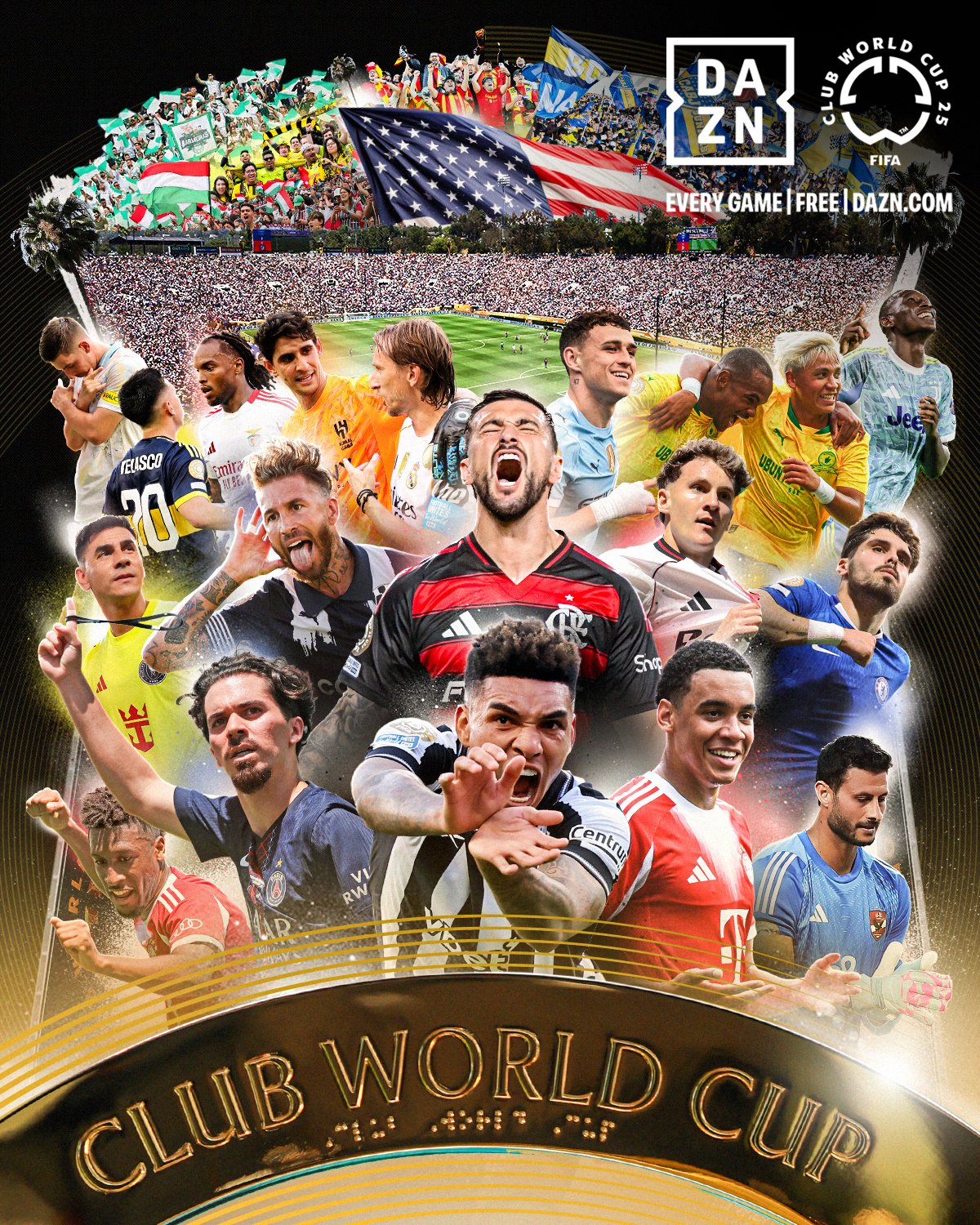
The 2025 FIFA Club World Cup was billed by FIFA President Gianni Infantino as a game changing global spectacle. It’s an expanded tournament meant to bring the world’s best clubs together and elevate the sport to new heights, especially in the lead up to the 2026 World Cup, but just days into the tournament, it’s clear that the fanfare has been overshadowed by a host of troubling issues. These issues range from empty stadiums, lopsided fixtures, scheduling controversies, and rising fears amongst immigrant communities in the United States.

⚽ A Star-Studded Start Can’t Hide Empty Seats
The opening match saw Lionel Messi lead Inter Miami against Egypt’s Al Ahly in Miami, drawing thousands of fans and a parade of football royalty including David Beckham, Ronaldo, Kaka, and Roberto Baggio. Yet beyond that opening spectacle, the excitement hasn’t held up.
Several matches have been played in near empty stadiums. Chelsea’s clash with LAFC in Atlanta drew just over 22,000 fans in a stadium built for 75,000. Flamengo vs. Esperance in Philadelphia, Botafogo vs. Seattle Sounders in Seattle, and even the Palmeiras vs. Porto match at the MetLife Stadium saw underwhelming attendance, with occupancy rates often hovering below 50%. Despite FIFA’s claim that 1.5 million tickets have been sold to fans from over 130 countries, the optics inside the stadiums tell a different story.
🥵 Fixture Overload and Dangerous Scheduling
The tournament’s tight schedule of three games per team in just nine days, has also drawn fire. With summer temperatures soaring and matches kicking off at noon or 3pm in cities like Los Angeles and Atlanta, player fatigue and safety have become major concerns.
During PSG’s match against Atletico Madrid, the temperature hit 31°C (87.8°F) at kickoff. Coaches and players, including PSG’s Luis Enrique and midfielder Vitinha, acknowledged the adverse effects of the heat on performance.
Global players’ union FIFPRO had previously warned that FIFA’s scheduling lacked sufficient protections for player health, particularly after long club and international seasons. Though FIFA instituted measures like cooling breaks and additional substitutions, critics argue these are insufficient and fail to address the broader concerns of burnout, injury, and mental health.
🧢 Mismatches Undermine Competition
The disparity in club strength has also been exposed early. Bayern Munich humiliated Oceania champions Auckland City a semi-pro side by 10-0 in their opening game, the largest margin in Club World Cup history. With Auckland ranked 4,957th in the world and Bayern sixth, the match felt more like a training session than a competitive fixture.
More mismatches are expected, with clubs like Boca Juniors and Benfica set to face far lower-ranked opponents. While diversity of representation is part of FIFA’s mission, the uneven playing field raises questions about the tournament’s format and competitive credibility.
🛂 Immigration Enforcement Sparks Fear Among Fans
As if the tournament didn’t have enough on its plate, the presence of U.S. Immigration and Customs Enforcement (ICE) and Customs and Border Protection (CBP) at Club World Cup venues has sparked controversy and unease—particularly in immigrant-heavy communities.
A now-deleted CBP social media post stating agents would be “suited and booted” for the event triggered backlash and concerns of racial profiling. ICE has since confirmed it would be present at matches and advised non-U.S. citizens to carry proof of legal status.
While federal involvement in major events is not new and similar security presence is also seen at Super Bowls and Olympics games, the political context under the current US administration has many worried. Immigration advocates warn that this could suppress attendance, especially among fans and tourists who fear being mistakenly targeted.

🌍 What Was Meant to Unite May Divide
FIFA hoped to use this tournament as a stepping stone to the much larger 2026 World Cup . However, early signs suggest that logistical missteps, lopsided matchups, oppressive heat, and political tensions may be alienating the very communities the sport aims to inspire.
As the group stages unfold, one question looms large:
Are these the growing pains of a bold new era in football, or signs of a rushed and flawed vision?
Let us know what you think.




Leave a Reply